Key Takeaways:
- Most people start to feel kava within 20 to 30 minutes. The exact timing shifts with the format you choose, what you've eaten, and your own body.
- Feeling it and peaking aren't the same thing. The first wave of calm usually shows up well before kavalactone levels in your blood top out, which tends to happen one to three hours in.
- The experience typically lasts a few hours. Most people describe a gentle taper over two to four hours rather than an abrupt drop-off.
You've mixed your kava, found a comfy spot on the couch, and now you're watching the clock. Maybe this is your first time trying it, or maybe you've had it before and can't quite remember when things started to shift. Either way, you're probably asking the same question: how long does kava take to work?
At FOCL, we're big believers in plant-powered calm that actually does something. So, the short answer is that most people notice a shift within 20 to 30 minutes. The longer answer is more interesting, because the timeline depends on a few things you can control.
Here's what happens after that first sip, what speeds things up or slows them down, and how long you can expect the experience to last.
What happens after you take kava
Kava's effects come from a group of compounds called kavalactones. Once you swallow them, they're absorbed through your digestive tract, move into your bloodstream, and eventually reach your brain. Once there, kavain, the best-researched kavalactone, amplifies the signaling at GABA-A receptors, the receptors that help your nervous system ease off the gas (Chua et al., 2016).*
Here's the part that surprises most people. When researchers measured kavalactone levels in healthy volunteers after a standardized dose, most of the major compounds didn't reach their highest concentration in the blood until one to three hours after the dose (Kanumuri et al., 2022). That doesn't mean you'll be waiting hours to feel anything. It means the effects tend to build gradually, with the first noticeable shift arriving well before the peak.
That gradual build is a feature, not a flaw. Because kava eases in rather than hitting all at once, it's easier to gauge how you're feeling and adjust your plans accordingly.

How fast does kava work in different formats?
Kava onset time can shift depending on the format you choose, mostly because of how much breaking down has to happen before absorption can begin.
Traditional kava drinks
Traditional kava is made by kneading ground root in water and straining it, so the kavalactones are already suspended in liquid by the time you drink it. With less for your stomach to break down first, many people report feeling the effects on the earlier end of the range.
Capsules and concentrated extracts
Capsules have a shell that needs to dissolve before anything gets absorbed, so they tend to land on the later side of the window. What capsules and other standardized extracts often offer in exchange is consistency, since a disclosed kavalactone percentage takes some of the guesswork out of each serving.
Gummies
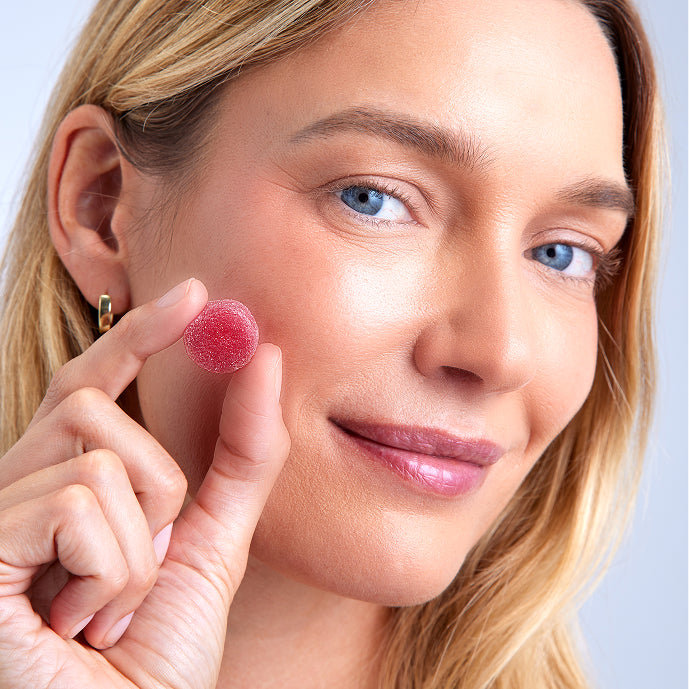
Gummies sit somewhere in the middle. You chew them, which gives digestion a head start, but they still need to break down before the kavalactones can be absorbed. For most people, that translates to a smooth, slower-paced onset rather than a sudden shift.
When does kava kick in? The factors that shift your timeline
Even with a typical window in mind, your own experience can vary from one night to the next. A few factors tend to make the biggest difference.
What's in your stomach
Food is probably the biggest variable you control. In that same pharmacokinetic study, taking kava with food reduced the amount of kavalactones the body absorbed (Kanumuri et al., 2022). Kavalactones are fat-soluble, so a small snack won't necessarily hurt, but taking kava right after a large meal tends to make the effects feel slower and softer. Many people find that taking it a while after a light snack strikes the best balance.
How much kava you're getting
The total amount of kavalactones per serving shapes how noticeable the effects are. That same study found that higher doses led to proportionally higher kavalactone levels in the blood, which is why a standardized extract with a clear kavalactone percentage gives you a more predictable experience than a product that doesn't disclose it (Kanumuri et al., 2022).
Your body and your day
Your metabolism, body size, hydration, and even how well you slept the night before can all play a role. Some people also report that kava feels more noticeable after they've used it a few times, an experience often called reverse tolerance. It hasn't been well studied, but it's a common enough report that it's worth knowing about if your first try feels subtle.

How long the experience commonly lasts
Onset is only half the story. Knowing how long until kava works and how long those effects stick around can help you plan your evening around it.
For most people, the first wave of calm arrives within that 20 to 30 minute window, and the experience gradually builds from there. The kava effects duration usually lands somewhere in the two to four hour range, with a slow taper rather than a sudden drop-off. Higher amounts tend to stretch that window out, and some people notice a lingering sense of ease beyond it.
Because the effects build and fade gradually, patience pays off, so let your first serving settle in completely before you reach for a second. It's also smart to skip alcohol while using kava, and a comprehensive review of kava research specifically advises avoiding high doses before driving or operating heavy machinery (Sarris et al., 2011).
What this looks like with FOCL's kava formats
If you're curious how these timelines translate to real products, FOCL's two kava formats land in slightly different spots. Our Kava Gummies pair kava extract with L-theanine and are designed to bring on a mellow mood within about 30 minutes.*
Kava Spritz, our sparkling-water-friendly premium Noble Kava mix, typically starts to feel noticeable within 20 to 40 minutes of sipping.* Either way, the same rules apply: give it time, go easy on the big meal beforehand, and talk to your healthcare provider beforehand if you're on any prescriptions or have an ongoing health concern.

Final Thoughts
So, how long does kava take to work? For most people, the first gentle shift shows up within about 20 to 30 minutes, the effects keep building as kavalactone levels rise over the next hour or two, and the whole experience tapers off over a few hours. The format you choose, what you ate beforehand, and the amount of kavalactones you're taking can all move that timeline a little, but it's consistent enough to plan an evening around.
Frequently Asked Questions About How Long Kava Takes To Work
Does kava work faster on an empty stomach?
Generally, yes. Research shows that food impacts how much of the kavalactones your body absorbs, so taking kava on an emptier stomach usually makes the effects feel quicker and more noticeable.
Can I take more kava if I don't feel it yet?
It's best to wait at least 45 minutes to an hour before considering another serving. Kava builds gradually, and its active compounds keep rising in your bloodstream for a while after you take it, so a second serving taken too early can stack up more than you intended.
Does the type of kava product change how fast it works?
It can. Liquid preparations tend to feel faster because there's nothing to break down first, while capsules and gummies might take a bit longer.
Why did kava feel different this time?
Day-to-day factors like what you ate, how hydrated you are, and how much sleep you got can all shift how quickly and strongly you feel kava. Some session-to-session variation is completely normal.
How long do kava's effects last?
Most people feel kava for about two to four hours, with a gradual taper toward the end. Higher amounts can extend that window.
Is it normal not to feel kava the first time?
Yes, and it's more common than you might expect. Some people find that kava becomes more noticeable after a few sessions, so a subtle first experience isn't necessarily a sign it isn't working for you.
*These statements have not been evaluated by the Food and Drug Administration. This product is not intended to diagnose, treat, cure or prevent any disease.
Sources:
- Chua, H. C., Christensen, E. T. H., Hoestgaard-Jensen, K., Hartiadi, L. Y., Ramzan, I., Jensen, A. A., Absalom, N. L., & Chebib, M. (2016). Kavain, the major constituent of the anxiolytic kava extract, potentiates GABA_A receptors: Functional characteristics and molecular mechanism. PLOS ONE, 11(6), e0157700. https://doi.org/10.1371/journal.pone.0157700
- Kanumuri, S. R. R., Mamallapalli, J., Nelson, R., McCurdy, C. R., Mathews, C. A., Xing, C., & Sharma, A. (2022). Clinical pharmacokinetics of kavalactones after oral dosing of standardized kava extract in healthy volunteers. Journal of Ethnopharmacology, 297, 115514. https://doi.org/10.1016/j.jep.2022.115514
- Sarris, J., LaPorte, E., & Schweitzer, I. (2011). Kava: A comprehensive review of efficacy, safety, and psychopharmacology. Australian & New Zealand Journal of Psychiatry, 45(1), 27–35. https://doi.org/10.3109/00048674.2010.522554