Key Takeaways:
- Kavalactones Drive The Calm: The active compounds in kava interact with the nervous system's pathways to support relaxation without heavy sedation. Unlike common sleep aids or alcohol, these compounds work gently.
- The Kava Feeling Is Distinct: Most people describe the kava feeling as physical ease paired with mental clarity, which sets it apart from alcohol and other common relaxants. That combination is what made kava a social staple in Pacific Island cultures.
- FOCL Offers A Modern Take: Our plant-based kava formulas bring this traditional botanical into a convenient, everyday format. Built on the same commitment to quality ingredients and real science that drives everything we make, our kava products are consistent, precisely dosed, and easy to work into your routine.
We've all been there. One drink to take the edge off turns into three, and what felt great at 9 PM feels a lot less great at 7 AM. So it's no surprise that more people are asking what else is out there, and that search keeps leading back to the same plant: kava. If you've spent any time in wellness circles lately, you've probably heard someone describe kava as "calming without putting you to sleep."
That description turns out to be more than a talking point. There's genuine science behind why kava relaxes you the way it does, and why it feels so different from a glass of wine or a sleep aid at the end of a long day. At FOCL, we build plant-based alternatives to the stuff that used to pass for a good time. Our kava line runs on the same standards as everything else we make: precise dosing, premium ingredients, and third-party testing. Relaxation doesn't need to come from alcohol or a harsh sleep aid.
So, how does kava make you feel? This piece walks through the chemistry behind kava's effects, what people typically experience, and how the research holds up.
Kava's Roots And How It Became A Wellness Staple
People have been drinking kava (Piper methysticum) for thousands of years, long before "wellness" was even a buzzword. Across Pacific Island cultures, from Fiji to Hawaii, it was ground from the plant's root and shared ceremonially to mark social gatherings and important occasions.
What made kava stand out was how consistent the experience was: calm and social warmth, without losing your clarity or your footing.* That kind of consistency doesn't go unnoticed, and it's exactly what eventually caught researchers' attention and helped kava make its way from ceremonial tradition into mainstream wellness. Curious to try it for yourself? Kava Spritz was built for exactly those moments. It uses 300mg of Noble Kava from KavaKalm™ Plus, standardized to 30% kavalactones, alongside lion's mane, ashwagandha, and L-theanine. Mocktail-ready, low-calorie, and engineered so the buzz shows up without the bill coming due at 7 AM.*

The Compounds Behind Kava Effects
Here's where it gets interesting. Kava's effects all trace back to a class of compounds called kavalactones, concentrated in the plant's root. Researchers have found 18 of them in kava, but just six do most of the heavy lifting when it comes to how kava makes you feel (Bian et al., 2020). Once you understand what those six compounds are doing, the "why" behind kava starts to make a lot more sense.
What Kavalactones Do In The Body
Meet kavain, the kavalactone doing most of the work. In laboratory research on human GABA-A receptors, kavain was shown to bind to those receptors and increase their activity, the same pathway that alcohol works on (Chua et al., 2016). GABA, short for gamma-aminobutyric acid, is your nervous system's chill button. When those receptors fire, your stress response eases up, and your muscles start to let go of tension.*
Here's what sets kava apart: kavain amplifies GABA's own signal rather than overriding it. That's a meaningful difference, and it's a big part of why kava supports a relaxed, social ease without impairing your judgment.* Worth being straight about the evidence, though: this is receptor-level lab work, not a human clinical trial. The mechanism is well characterized. Human research is still catching up to it, which is exactly why kava is an active area of study right now.
Kava Effects On Mood
Kavalactones don't stop at GABA. They also influence mood-related brain chemistry, including dopamine and serotonin activity (Bian et al., 2020).* That tracks with what people describe feeling: a lighter, more open mood without any heaviness dragging it down.* That pairing is why kava has held its place in social settings for centuries. Ease and clarity at the same time is a genuinely rare combination, and most things that promise both deliver one.
There's a version of this that lands differently depending on where you are in life. If you're in your 40s and the wine that used to take the edge off now costs you a 3 AM wake-up and a wrecked next morning, the math on that trade has changed. Kava is one of the few options that gives you the ritual and the social ease back without charging you for it at sunrise.
How FOCL Uses Kava
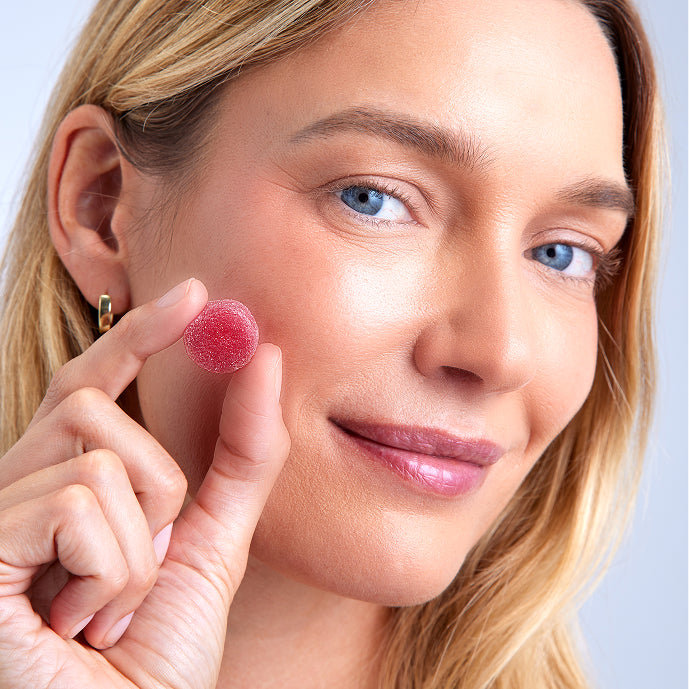
We built our kava products around one simple idea: people want the perks of kava without the traditional prep work, which historically means straining and mixing ground root by hand. Nobody's got time for that. Our formulas package those same benefits into something that fits a busy routine, whether that's a mocktail-ready spritz or something more pop-and-go, like our Kava Gummies. Each gummy delivers a mellow mood similar to a glass of wine within 30 minutes, powered by 300mg of kava extract standardized to 30% kavalactones, plus 100mg of L-theanine to smooth the edges.*
The rule of thumb either way: one, roughly 30 minutes before you want to feel it, and give it that full window before deciding whether you want more.

What Does Kava Feel Like?
This is usually the first question people ask, and fair enough. Knowing what to expect makes the effects a lot easier to recognize once they show up.
The Kava Feeling Most People Describe
Give it 20 to 30 minutes, and the kava feeling starts to build. Physically, it shows up first in the spots where you hold tension: shoulders, neck, and jaw.* Mentally, you stay clear and present. That's the part that separates kava from the relaxants that fog you up on the way to calming you down.* Some people also get a little tingling in the mouth. That's just the kavalactones doing their thing, and it fades fast.
Kava Relaxation Effects Compared To Other Options
People love comparing kava to alcohol, and it makes sense, since both get used socially and both take the edge off. That's where the similarities end, though. At typical doses, kava won't mess with your coordination or leave you dragging the next morning the way alcohol will.* If you want to feel relaxed and still feel like yourself, that difference is impossible to miss, and it's a big reason kava has built such a loyal following among people cutting back on drinking without giving up the ritual.

Final Thoughts
So: how does kava make you feel? Loose in the shoulders, clear in the head, and still fully yourself at the end of the night. That specific combination is why a plant from the Pacific Islands ended up in a can on your counter.
If you want to try it, start with Kava Spritz over ice around 30 minutes before you'd normally pour a drink. One is the whole ritual. That's usually the point. Or keep Kava Gummies in your bag for the nights when mixing anything at all is more effort than you have in you.
Either way, you wake up tomorrow with the evening intact and nothing to apologize for.
Frequently Asked Questions About How Kava Makes You Feel
How long does it take to feel kava's effects?
About 20 to 30 minutes, usually. Kava builds gradually instead of hitting you all at once, which makes it easier to feel it kick in and get a read on how your body's responding.
Does kava make you feel high?
No. Kava relaxes the mind without impairing your judgment.* People describe it as calm, grounded, and social, closer to the first 20 minutes of a good drink than to anything altered. You stay clear, you stay coordinated, and you remember the conversation.
How does kava compare to alcohol?
Kava eases tension and helps you feel relaxed and social without messing with your coordination or leaving you dragging the next day.* That's a big part of why people reach for it instead of a drink when they want a change of pace.
Is it safe to take kava regularly?
For most healthy adults, kava is well-tolerated at reasonable amounts. Still, it's worth checking in with your healthcare provider first, especially if you're on medication or managing a health condition.
What does kava taste like?
Earthy and a little bitter, with a mild tingle on the tongue from the kavalactones. That tingle is completely normal and fades fast. Most modern kava products, ours included, are formulated to soften that flavor.
Can kava help with everyday stress?
Kava's compounds work on the same GABA pathways involved in your body's stress response (Chua et al., 2016), so it's no surprise people reach for it on a stressful day. However, if you're dealing with ongoing stress, a healthcare professional is always the right person to loop in.
Does kava interact with medications?
It can, especially with anything that has a sedating effect. If you're taking medications or other supplements, check in with your healthcare provider before adding kava to the mix.
Sources:
- Bian, T., Corral, P., Wang, Y., Botello, J., Kingston, R., Daniels, T., Salloum, R. G., Johnston, E., Huo, Z., Lu, J., Liu, A. C., & Xing, C. (2020). Kava as a clinical nutrient: Promises and challenges. Nutrients, 12(10), 3044. https://doi.org/10.3390/nu12103044
- Chua, H. C., Christensen, E. T. H., Hoestgaard-Jensen, K., Hartiadi, L. Y., Ramzan, I., Jensen, A. A., Absalom, N. L., & Chebib, M. (2016). Kavain, the major constituent of the anxiolytic kava extract, potentiates GABA_A receptors: Functional characteristics and molecular mechanism. PLOS ONE, 11(6), e0157700. https://doi.org/10.1371/journal.pone.0157700