Kava has been used in Pacific Island cultures for thousands of years, specifically for social ease and mental calm. What makes it a popular subject for modern research is that its effects are traceable to specific compounds in the root, which means they can be studied, measured, and replicated.
The Plant Compounds Behind Kava’s Calming Effects
The active compounds in kava are called kavalactones. Researchers have identified 18 of them, with six accounting for most of the activity in the body (Bian et al., 2020). These compounds interact with GABA-A receptors in the brain, the same receptors involved in the body's natural calming response (Chua et al., 2016). When those receptors are activated, tension eases, and the nervous system settles. The kava calming effects that follow arrive within about 30 minutes, without the coordination impairment or cognitive fog that comes with many other calming options (Sarris et al., 2011).
Kava For Relaxation, Not Sedation
What sets kava apart from a lot of other calming options is that it doesn't ask you to trade clarity for calm. Its effects are clear-headed rather than sedating, which makes it useful during social situations and earlier in the evening, when you still want to be present. For instance, alcohol works on overlapping receptor pathways but does so broadly, with well-known trade-offs like a heavy, groggy feeling in the morning. Meanwhile, many herbal calming supplements are milder, but they typically take weeks of regular use before you start to feel a shift.
By contrast, kava is felt the same day you take it, typically within 30 to 45 minutes. That fast-acting mechanism is part of what makes it a practical option for situational anxiety and social stress, rather than something you need to maintain a long-term schedule around before you notice anything.
How FOCL Formulates Around Kava For Anxiety
We approached kava the same way we approach every ingredient we use. First, we rolled up our sleeves to understand the mechanism inside and out, then we reviewed the scientific evidence and created our supplements around what the research says.
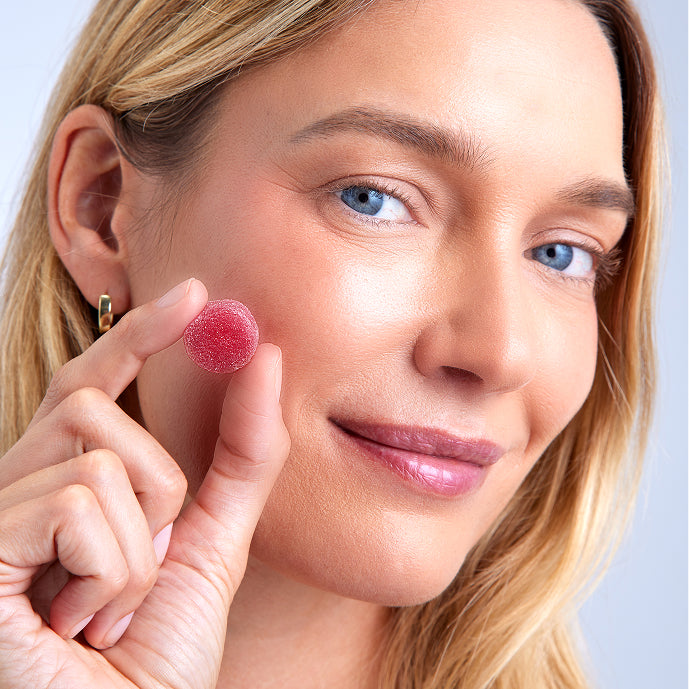
Our Kava Spritz delivers 300mg of Noble Kava from KavaKalm™ Plus, standardized to 30% kavalactones, alongside lion's mane, ashwagandha, and L-theanine, for a calm, clear-headed buzz without the tradeoffs of alcohol. If you'd rather skip the mixing altogether, our thoughtfully designed Kava Gummies carry a standardized kava extract with L-theanine in a convenient pop-and-go format that comes in three juicy flavors: Sour Watermelon, Sour Raspberry, and Blood Orange. Smooth and mellow, it unwinds like wine without the hangover or extra calories, and the chill typically kicks in within 20 to 40 minutes.*
As with any supplement, speaking with a healthcare provider before adding kava to your routine is the right first step, especially if you're managing a diagnosed anxiety condition or taking medications.
Does Kava Help Anxiety? What The Research Shows
The evidence behind kava for anxiety is more substantive than most people expect, particularly given how recently scientific interest has accelerated.
What Clinical Trials Have Observed
To start, a Cochrane systematic review pooling several randomized controlled trials found that kava extract was more effective than placebo at targeting anxiety symptoms (Pittler & Ernst, 2003). Further, a separate double-blind, placebo-controlled trial of 75 adults with a generalized anxiety diagnosis found a noteworthy decrease in anxiety with kava compared to placebo, with a moderate effect size (Sarris et al., 2013).
However, it's worth being clear about what this research does and doesn't say. These trials studied a diagnosed clinical condition under medical supervision. They're useful for understanding how kava works and how well-supported its soothing effects are, but they aren't a reason to substitute kava for prescribed treatment or a doctor's guidance.
Why Source And Standardization Matter
Overall, the studies with the strongest outcomes used standardized Noble kava root extract at consistent kavalactone concentrations. That's not a minor detail. Rather, it determines whether a product is actually delivering the compound profile on which the research was built. Kava products that aren't standardized, or that are made from parts of the plant other than the root, aren't operating on the same evidence base. Kava Spritz is made with Noble Kava, the variety used in the clinical research, so if the studies are your deciding factor, Spritz is the closer match to what's been tested.*
Kava For Stress In Everyday Life
Clinical research tends to focus on diagnosed anxiety, but most people's relationship with kava is more practical than that. This is where the majority of people actually encounter it: the social event that feels like too much, the evening that won't let your brain disengage, or the part of the workday when focus frays into restlessness.
Kava's effects don't require clinical-level anxiety to be useful. The same receptor modulation behind its studied effects also supports a more settled nervous system in people who are simply carrying more tension than they'd like to be. That's what people usually mean when they search for kava anxiety relief: a practical tool for the parts of the day that feel harder than they should, not a treatment for a diagnosed condition.
Sources:
- Bian, T., Corral, P., Wang, Y., Botello, J., Kingston, R., Daniels, T., Salloum, R. G., Johnston, E., Huo, Z., Lu, J., Liu, A. C., & Xing, C. (2020). Kava as a clinical nutrient: Promises and challenges. Nutrients, 12(10), 3044. https://doi.org/10.3390/nu12103044
- Chua, H. C., Christensen, E. T. H., Hoestgaard-Jensen, K., Hartiadi, L. Y., Ramzan, I., Jensen, A. A., Absalom, N. L., & Chebib, M. (2016). Kavain, the major constituent of the anxiolytic kava extract, potentiates GABA_A receptors: Functional characteristics and molecular mechanism. PLOS ONE, 11(6), e0157700. https://doi.org/10.1371/journal.pone.0157700
- Sarris, J., LaPorte, E., & Schweitzer, I. (2011). Kava: A comprehensive review of efficacy, safety, and psychopharmacology. Australian & New Zealand Journal of Psychiatry, 45(1), 27–35. https://doi.org/10.3109/00048674.2010.522554
- Pittler, M. H., & Ernst, E. (2003). Kava extract for treating anxiety. Cochrane Database of Systematic Reviews, 1, CD003383. https://doi.org/10.1002/14651858.CD003383
- Sarris, J., Stough, C., Bousman, C. A., Wahid, Z. T., Murray, G., Teschke, R., Savage, K. M., Dowell, A., Ng, C., & Schweitzer, I. (2013). Kava in the treatment of generalized anxiety disorder: A double-blind, randomized, placebo-controlled study. Journal of Clinical Psychopharmacology, 33(5), 643–648. https://doi.org/10.1097/JCP.0b013e318291be67