L-theanine is a non-protein amino acid that comes almost entirely from the tea plant, Camellia sinensis. It's a big reason a cup of green tea feels so different from a cup of coffee, even though both contain caffeine. Tea tends to leave people alert but composed, and L-theanine is the ingredient most often credited for that smoother experience.
Its effects show up clearly in your brain waves. In a study measuring brain activity with EEG, people who took L-theanine showed increased alpha wave activity, the brainwave pattern associated with being relaxed yet awake (Nobre et al., 2008).* That's an important distinction. Alpha waves aren't the slow patterns linked to sleepiness. They're the pattern you see in someone who's calm, attentive, and not distracted by mental static.
That laid-back-but-awake state is the foundation of most L-theanine focus benefits people talk about. Instead of forcing your brain into a heightened state the way stimulants do, L-theanine helps turn down the background noise so it's easier to stay with whatever's in front of you.*
Where you'll find L-theanine
Here's how we use it at FOCL.
Kava Spritz: calm and present, with lion's mane on board
Kava Spritz pairs 150mg of L-theanine with a 300mg serving of KavaKalm™ Plus Noble Kava, 300mg of lion's mane, and 200mg of ashwagandha. The L-theanine and kava work together to take the edge off, while lion's mane supports mental clarity, so you feel relaxed without feeling foggy.* It's a mocktail-ready drink made for after-work wind-downs and social evenings, when you want to be chill and still fully engaged with the people around you.*
Kava Gummies: the pocket-sized version
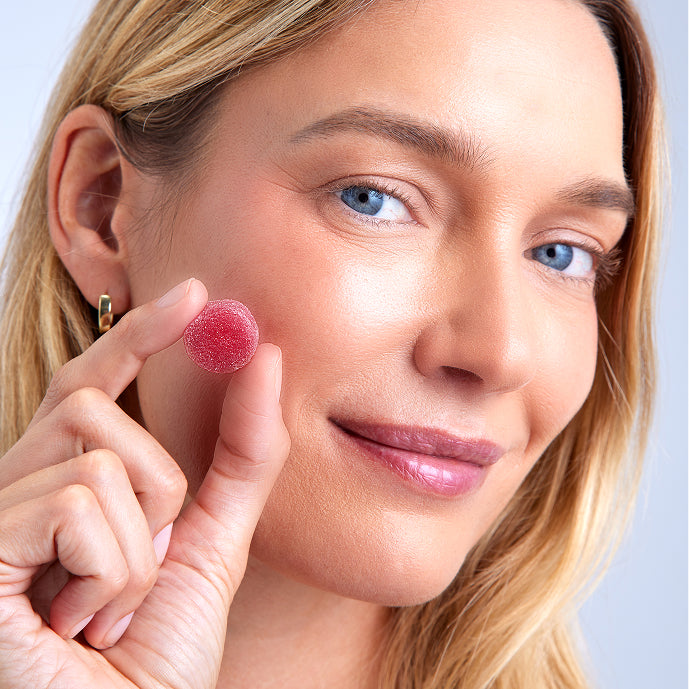
Kava Gummies combine 100mg of L-theanine with 300mg of kava extract in a pop-and-go format. They offer a relaxed, glass-of-wine kind of ease in roughly half an hour, without leaving you feeling out of it.* If you want the calm, clear-headed effect without mixing a drink, these are the easy option.
Night Magnesium+: quieting the mental chatter at bedtime
Night Magnesium+ packs the biggest L-theanine dose in our lineup at 300mg, alongside magnesium bisglycinate, GABA, phytomelatonin, and calming botanicals like lemon balm and reishi. Here, L-theanine's job is to help silence the racing thoughts that keep you staring at the ceiling, so your mind is ready to rest when your head hits the pillow.*
Because both kava products relax your nervous system, save them for times you don't need to drive or operate machinery, and skip alcohol while using them. As with any supplement, get your doctor's input before starting, especially if you're on prescriptions or have a chronic health concern.
What the research shows
Here's where we want to be straight with you, because a lot of marketing overstates this part. Most of the strongest cognitive research on L-theanine studies it paired with caffeine, not on its own.
When researchers tested 250mg of L-theanine and 150mg of caffeine separately and together, the combination produced the clearest wins, including faster reaction times, better accuracy on demanding tasks, and less self-reported mental fatigue (Haskell et al., 2008). L-theanine alone didn't improve task performance in that study. A separate trial using a lower dose of 100mg L-theanine with 50mg of caffeine found the pairing improved both speed and accuracy when switching between tasks and made people less likely to get thrown off by distracting information (Owen et al., 2008).
So what does that mean for you? If sharper performance on a demanding task is the goal, research on L-theanine for concentration points to pairing it with a modest amount of caffeine, which is exactly what a cup of green tea naturally does. On its own, L-theanine's most reliable effect is the grounding alertness described above, which is why we use it to keep our calming formulas clear-headed rather than sedating.*
How much L-theanine you need
Most studies on L-theanine have used doses in the range of roughly 50mg to 250mg, depending on what they were measuring. Brain wave research found effects at the lower end of that range, while cognitive performance trials typically used 100mg to 250mg alongside caffeine.
That makes L-theanine dosage for focus less about hitting a magic number and more about matching the amount to what you want it to do. Kava Gummies' 100mg and Kava Spritz's 150mg sit squarely in the range studied for a calm, clear state, while Night Magnesium+ goes higher at 300mg because it's built for winding all the way down at night.*
Whatever product you choose, look for one that lists the exact amount of L-theanine on the label. If it's buried in a proprietary blend, there's no way to compare it against the research. For a broader look at how L-theanine fits alongside other ingredients people use to support their minds, our Brain Boost guide is a good next read.
When to reach for L-theanine for focus
L-theanine tends to work fairly quickly, with most people noticing its calming effects within 30 to 60 minutes, so timing it to the moment you want it makes a real difference.
Reach for Kava Spritz or Kava Gummies at the end of the workday or before a social plan, when you want to let go of the day's tension without losing the thread of the conversation. In contrast, sip Night Magnesium+ in the half hour to hour before lights-out, when L-theanine's job shifts to helping your mind power down.* And if daytime focus is the goal, that's a job for our Better Brain Gummies, which use lion's mane, cordyceps, and reishi to support clear, steady attention without any caffeine.*
*These statements have not been evaluated by the Food and Drug Administration. This product is not intended to diagnose, treat, cure or prevent any disease.
Sources:
- Haskell, C. F., Kennedy, D. O., Milne, A. L., Wesnes, K. A., & Scholey, A. B. (2008). The effects of L-theanine, caffeine and their combination on cognition and mood. Biological Psychology, 77(2), 113–122. https://doi.org/10.1016/j.biopsycho.2007.09.008
- Nobre, A. C., Rao, A., & Owen, G. N. (2008). L-theanine, a natural constituent in tea, and its effect on mental state. Asia Pacific Journal of Clinical Nutrition, 17(Suppl. 1), 167–168.
- Owen, G. N., Parnell, H., De Bruin, E. A., & Rycroft, J. A. (2008). The combined effects of L-theanine and caffeine on cognitive performance and mood. Nutritional Neuroscience, 11(4), 193–198. https://doi.org/10.1179/147683008X301513