Key Takeaways:
- Kava root powder is the traditional, less processed form: It uses the whole dried root and retains the plant's full range of natural compounds, though kavalactone content can vary from batch to batch depending on the plant and how it was prepared.
- Kava extract delivers more consistent, concentrated results: By isolating and standardizing the kavalactones, a quality extract removes the variability and gives you a clearer sense of what you're taking with every serving.
- The best form of kava depends on what you're looking for: Root powder suits the traditional, ceremonial experience; standardized extracts are a better fit for anyone who wants reliable, repeatable calm in a modern, easy-to-take format.*
If you've spent any time shopping for kava, you've probably come across both options: loose root powder you brew yourself and concentrated extracts in gummies, capsules, or ready-to-drink formats. Both come from the same plant and share the same active compounds, but the consistency and experience are not always the same.
At FOCL, we landed on Noble Kava extract standardized to 30% kavalactones for our lineup because it gives us something root powder alone can't guarantee: a product that delivers the same calm-supporting experience every time.*
In this article, we'll cover what separates kava root from kava extract, how each is made, what those differences mean in practice, and how we think about quality across our kava products.
Starting From The Source: What Is Kava Root Powder?
Kava root powder is the most traditional form of kava, closely tied to its cultural origins across the Pacific Islands, where it has been prepared and shared ceremonially for centuries (Lebot et al., 1992). The root is harvested, dried, and ground into a fine powder that gets steeped in water, kneaded, and strained before drinking.
Its appeal is closeness to the source. The full range of the plant's natural compounds, including the kavalactones responsible for its calming effects,* comes through in the preparation without any concentration or processing. The tradeoff is consistency: kavalactone content can vary batch to batch depending on the plant variety, harvest age, and how it was dried and stored.
Our Kava collection is built around what comes after the root, but understanding where the plant starts helps explain why the extraction step matters.

How Kava Extract Is Made And What Sets It Apart
A kava extract starts with the same root as kava root powder but goes through an additional step to concentrate and standardize the active compounds. That's where the two forms begin to diverge.
The Extraction Process
Manufacturers isolate kavalactones from the root using a solvent or water-based process, then remove the carrier and concentrate what remains. The result is a product with a much higher kavalactone density per gram than raw root powder, and with the right source plant, that content can be locked to a specific percentage.
What Kavalactone Standardization Actually Means
Standardization means every batch is adjusted to contain the same concentration of active compounds. A label reading "30% kavalactones" means 30 grams of kavalactones per 100 grams of extract, verified regardless of harvest date or plant origin. That's the consistency whole root powder can't reliably offer (Sarris et al., 2011).
Kava Extract Benefits Over Whole Root
The main kava extract benefits are concentration and consistency. Less material delivers a meaningful kavalactone dose, the product stores better, and it works in formats like gummies and sparkling drinks without any preparation. For anyone who wants a calm, easygoing experience from kava,* a standardized extract is the more practical entry point.
Kava Concentrate vs Root: Choosing What Works For You
The kava extract vs root powder question doesn't have one right answer. Both forms have genuine merit, and the better fit depends on what you actually want from the experience.
When Kava Root Powder Makes Sense
Root powder suits anyone drawn to the traditional kava experience: the prep ritual, the earthy taste, and the communal pace of brewing and drinking a proper bowl. If you enjoy exploring different cultivars by hand, root powder offers a range that extracts can't replicate. It's also the form most commonly found at kava bars.
When A Standardized Extract Is The Better Fit
For everyday use without the brewing process, standardized extracts are hard to beat. A known kavalactone percentage means a predictable serving every time, which is especially useful if you're newer to kava and still learning how your body responds. It's a strong case for why a standardized extract is often considered the best form of kava for daily use, and it travels far more easily than traditional prep allows.
How We Approach Kava Quality At FOCL
We made a deliberate choice to work with Noble Kava extract standardized to 30% kavalactones using KavaKalm™ Plus. Noble Kava refers to the traditional cultivars used for generations, distinct from varieties associated with a harsher experience. Starting there and standardizing the extract means our products hit the same quality baseline in every serving.
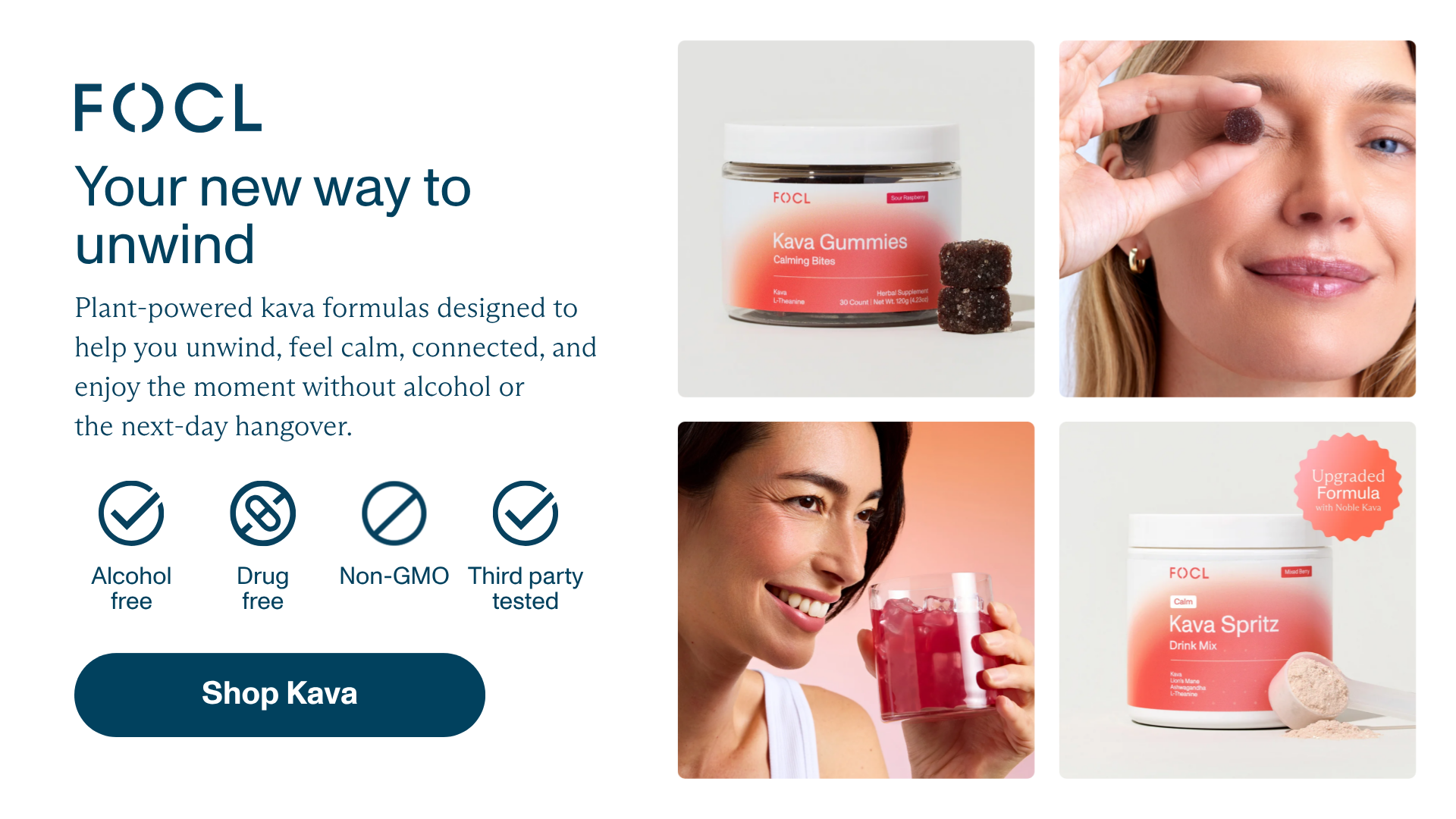
Our Kava Gummies pair 300mg of that extract at 30% kavalactones with 100mg of L-theanine, an amino acid often taken to support a calm, focused state of mind.* Simple, consistent, and ready to work into any evening routine.
Our Kava Spritz Calm Social Buzz brings the same extract into a ready-to-drink format alongside lion's mane, ashwagandha, and L-theanine. Built for moments where you want to ease into a social setting, it delivers in the same 20 to 30 minute window every time.*

Final Thoughts
Kava root powder and kava extract both come from the same plant with the same active compounds. The difference is consistency. Root powder offers the traditional whole-plant experience; extract gives you a concentrated, standardized form that fits a modern routine more easily.
For most people exploring what kava may support in terms of calm and ease,* a standardized extract is the more practical starting point, and as far as we're concerned, the only kind worth putting into a product.
Frequently Asked Questions About Kava Root vs Extract
Is kava extract stronger than kava root powder?
Not necessarily stronger, but more concentrated and consistent. A standardized extract has a verified kavalactone content, so each serving delivers a reliable dose. Root powder potency can shift significantly depending on the plant variety and preparation.
Can kava root powder and kava extract be used the same way?
They're taken for the same general purpose but prepared differently. Root powder requires steeping, kneading, and straining, while extracts come in ready-to-use formats like gummies, capsules, and pre-mixed drinks.
What is kava root powder made from?
Kava root powder comes from the dried, ground root of the Piper methysticum plant. After harvesting and drying, the root is milled into a powder and then prepared as a traditional kava drink.
Are the kava extract benefits different from what root powder offers?
The core of what kava may support is the same in both forms, since kavalactones are the active compounds in either case.* The practical difference is that an extract delivers a standardized dose, making results more predictable than root powder, where potency can shift between batches.
Which is the best form of kava for someone new to it?
A standardized extract in a gummy or ready-to-drink format is usually the better starting point. Consistent dosing makes it easier to understand how your body responds, rather than accounting for the natural variability in home-brewed root powder.
Does kava extract contain the same compounds as root powder?
Yes. Both come from the same plant and contain kavalactones as the primary active compounds. The extract has been processed to concentrate and standardize those compounds, while root powder retains the plant's full content at naturally varying concentrations.
|
*These statements have not been evaluated by the Food and Drug Administration. This product is not intended to diagnose, treat, cure or prevent any disease. |
Sources:
- Lebot, V., Merlin, M., & Lindstrom, L. (1992). Kava: The Pacific Drug. Yale University Press.
- Sarris, J., LaPorte, E., & Schweitzer, I. (2011). Kava: A comprehensive review of efficacy, safety, and psychopharmacology. Australian and New Zealand Journal of Psychiatry, 45(1), 27–35. https://doi.org/10.3109/00048674.2010.522554